Eat real food. Feed your microbiome. Let fermentation do some of the work.
Fermented foods are becoming increasingly fashionable, but fermentation is certainly not a new trend.
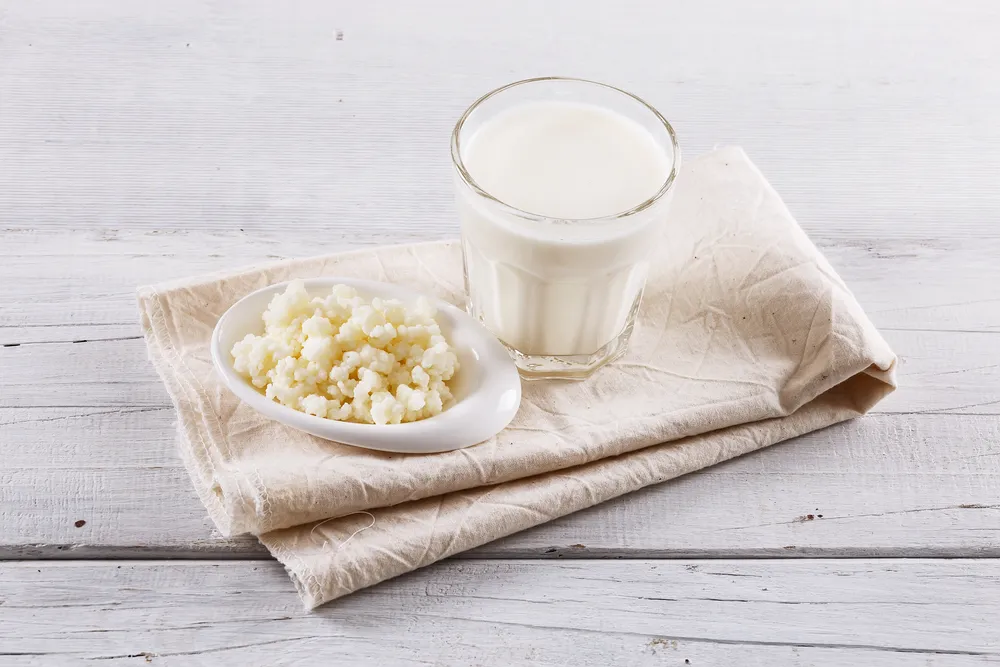
Kefir is a naturally fermented milk drink with a smooth, creamy texture and a pleasantly sour taste. It is traditionally made using kefir grains – a complex community of bacteria and yeasts that ferment the milk.
The result is a food that is quite different from ordinary milk. Fermentation changes its flavour, texture and microbial composition, while also producing a range of compounds created by the microorganisms during the fermentation process.
And this is what makes kefir particularly interesting.
Rather than taking a probiotic in a capsule, you can obtain live microorganisms as part of a whole food.
What exactly is kefir?
Kefir has a long history, with origins associated with the Caucasus and regions of Central and Western Asia. It has traditionally been used as both a food and a method of preserving milk.
The fermentation process involves a community of microorganisms, including lactic acid bacteria and yeasts.
These microorganisms use carbohydrates in the milk as an energy source and produce metabolic by-products including lactic acid, acetic acid and carbon dioxide. The fermentation also partially breaks down lactose, which is one reason some people who have difficulty digesting lactose find fermented dairy products easier to tolerate.
Traditional kefir contains a particularly diverse microbial community including Lactococcus, Leuconostoc and Lactobacillus, as well as yeasts and Acetobacter.
This diversity is one of the fascinating aspects of kefir.
Food-based probiotics versus probiotic supplements
We often think about probiotics as something we buy in a capsule.
But food has been carrying microorganisms for thousands of years.
Fermented foods such as kefir, yoghurt, certain fermented vegetables and other traditionally fermented foods can contain live microorganisms, alongside the nutrients and fermentation-derived compounds naturally present in the food.
This doesn’t mean every fermented food is automatically a probiotic food. Microorganisms vary considerably according to the food, fermentation method, temperature, duration and storage conditions. Some fermented foods are subsequently heated or pasteurised, which can remove live microorganisms.
But when a traditionally fermented food contains live cultures, it provides an interesting food-first way of introducing microorganisms into the diet.
And there is growing scientific interest in what these foods can do.
A 2024 review in Nature Reviews Gastroenterology & Hepatology described several possible mechanisms through which fermented foods may influence gastrointestinal health, including effects from live microorganisms as well as metabolites and other components produced during fermentation.
Why is the gut microbiome so important?
Our digestive tract is home to an enormous microbial ecosystem.
These microorganisms interact with the food we eat, the intestinal lining and the wider immune system. The relationship is complex, and we are still learning how much the composition and activity of the gut microbiome influence human health.
This is one reason I find food-based fermentation so fascinating.
When we ferment food, microorganisms begin breaking down components of that food before we eat it. They can produce organic acids, enzymes, peptides and other metabolites that change the food’s nutritional and biochemical characteristics.
Kefir contains both microorganisms and compounds produced during fermentation, so its potential effects are not necessarily explained by the bacteria alone.
What does the research say about kefir?
A systematic review of human intervention studies published in 2026 found that kefir consumption was associated with modest and variable changes in the gut microbiota. In several studies, Bifidobacterium increased, and kefir-associated microorganisms were detected in participants’ stool samples. The researchers concluded that the evidence is promising but that the changes are heterogeneous and more research is needed.
Fermented foods and digestive health
The wider evidence for fermented foods is also developing.
A 2025 systematic review and meta-analysis involving more than 4,300 participants found that fermented-food consumption was associated with improvements in several measures of gastrointestinal wellbeing, including bowel-movement frequency, stool consistency, intestinal transit time and gastrointestinal symptoms. However, the researchers also noted that the certainty of evidence varied and was often low.
This fits nicely with what we understand about fermentation.
The microorganisms involved in fermentation can transform food components and produce compounds such as organic acids and bioactive peptides. These changes may influence the intestinal environment and interactions between food, microbes and the gut lining.
It is another reason to think of fermented foods as food with added biological activity, rather than simply another trendy food category.
Kefir is more than bacteria
One of the most interesting aspects of kefir is that it contains a mixture of microorganisms rather than a single bacterial strain.
Traditional kefir can contain lactic acid bacteria, other bacteria and yeasts. These microorganisms interact with one another during fermentation and produce a variety of compounds.
Research has identified fermentation-derived compounds including organic acids, bioactive peptides and exopolysaccharides such as kefiran. These compounds have demonstrated interesting biological activity in laboratory and experimental research, although their clinical significance in humans is not yet fully established.
So when we drink kefir, we are not simply consuming a probiotic organism.
We are consuming a fermented food ecosystem.
What about lactose?
During kefir fermentation, microorganisms use lactose and produce lactic acid and other fermentation products.
This can reduce the lactose content of the finished product and may improve lactose digestion and tolerance for some people.
However, kefir is still a dairy food and is not automatically suitable for someone with a milk allergy. Lactose intolerance and milk-protein allergy are very different conditions.
For those who tolerate dairy, kefir can provide protein, calcium and other nutrients alongside its fermented characteristics.
Kefir and exercise
Intense exercise places physiological stress on the body, and gastrointestinal symptoms are relatively common in physically active people. The original research discussed in this article suggested that probiotic supplementation could influence gut and immune function in athletes, with some studies reporting reductions in gastrointestinal symptoms and upper respiratory tract infections.
More recent evidence still suggests that probiotics and fermented foods may have potential in supporting gastrointestinal and immune health, but we need to be careful not to turn this into a performance claim.
Kefir isn’t a sports supplement.
It is a nutrient-dense fermented food that may be particularly useful for active people because it combines protein and micronutrients with live microorganisms and fermentation-derived compounds.
That makes it an interesting addition to an overall food-first approach to sports nutrition.
Kefir after exercise
Kefir naturally provides protein and other nutrients, making it a convenient food to incorporate into a post-exercise meal or snack.
You don’t necessarily need to turn kefir into a complicated recovery formula.
Try kefir with berries, banana, oats, seeds or other whole foods.
Or simply have it alongside a meal.
The important point is that the food itself provides the nutrition, rather than relying on an isolated probiotic supplement.
How to include kefir in your diet
Kefir is incredibly versatile.
Try it:
- With berries and seeds for breakfast
- Blended into a smoothie
- With oats and fruit
- As the base for a savoury dressing
- In place of some of the yoghurt in a recipe
- Alongside a meal
- Blended with herbs, garlic and lemon as a dip or sauce
If you are new to kefir, start with a small amount and see how you tolerate it.
And remember that not all kefirs are the same. If you are specifically looking for live microorganisms, check the product information for live cultures and whether the product has been heat-treated after fermentation. Or even better – make it yourself with organic whole milk.
Food first
There is something particularly appealing about obtaining beneficial microorganisms through food.
A probiotic capsule might contain selected strains at a specified dose, but a fermented food brings much more to the table: protein, minerals, vitamins, fermentation-derived compounds, flavour and the microorganisms themselves.
That doesn’t mean supplements are never useful.
It simply means that food should remain the foundation.
Kefir is a wonderful example of how traditional food preparation can intersect with modern microbiome science.
We don’t need to invent a new food to support our health.
Sometimes we simply need to rediscover what our ancestors already knew about fermentation.
The bottom line
Kefir is a fascinating fermented food with a complex microbial community and a growing body of human research suggesting potential benefits for gut health and metabolic health.
Perhaps most importantly, it is an easy and delicious way to bring fermented food into everyday eating.
Eat real food. Feed your microbiome. And let fermentation do some of the work.
Frequently Asked Questions
Is kefir better than yoghurt?
Not necessarily – they are simply different fermented foods. Kefir typically contains a more diverse microbial community, including bacteria and yeasts, whereas yoghurt generally contains specific starter cultures. Both can be nutritious additions to the diet. The choice can come down to taste, tolerance and variety.
Does kefir contain probiotics?
Traditional or homemade produced kefir can contain a diverse range of live microorganisms, including bacteria and yeasts. However, not every commercial kefir will contain the same microorganisms or quantities, and some products may be heat-treated. Check the label and preparation method.
Can kefir improve gut health?
There is promising evidence that kefir can influence the gut microbiota and gastrointestinal health, but the effects seen in human studies are variable. A 2026 systematic review found modest and heterogeneous changes in the gut microbiota, while a 2025 meta-analysis of fermented foods found improvements in several measures of gastrointestinal wellbeing. More high-quality research is still needed.
Can I drink kefir if I am lactose intolerant?
Some people with lactose intolerance find fermented dairy products such as kefir easier to tolerate because fermentation reduces some of the lactose and the live microorganisms can contribute lactase activity. However, tolerance varies between individuals. Kefir is not suitable for someone with a milk-protein allergy, which is a different condition.
When is the best time to drink kefir?
There isn’t a scientifically established “best” time. Kefir can be incorporated whenever it fits comfortably into your diet – with breakfast, as part of a snack, blended into a smoothie or alongside a meal. For active people, it can also be a convenient source of protein and nutrients around exercise, but there is no need to treat it as a special sports supplement.