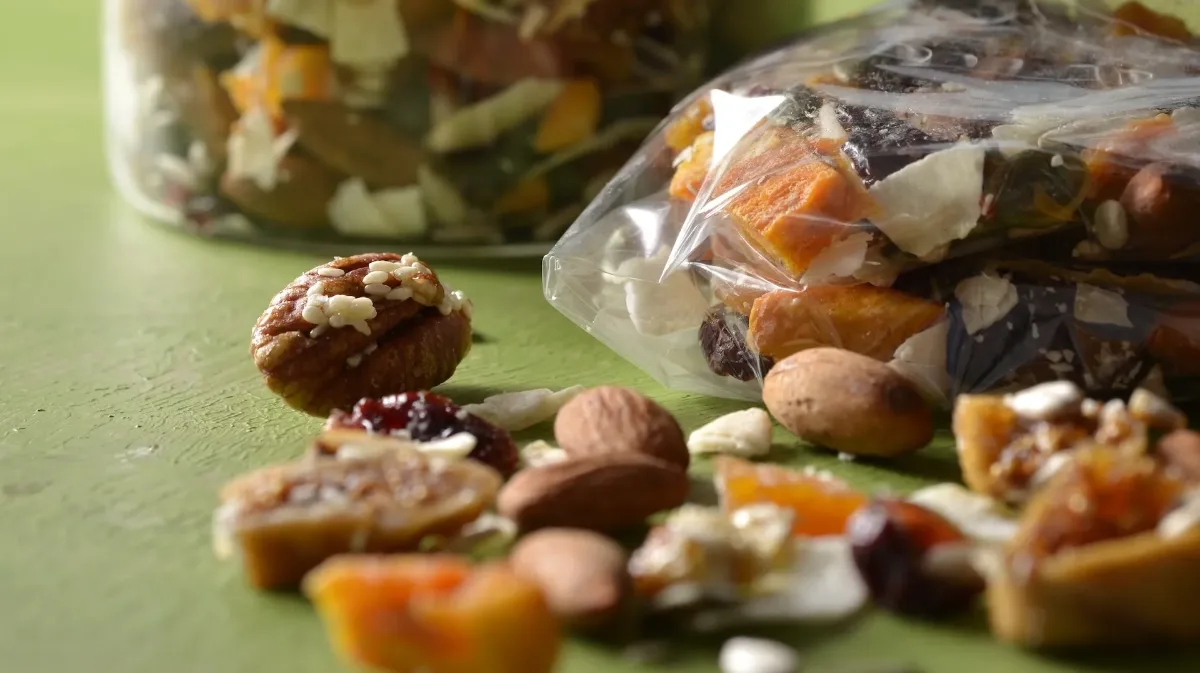
Sometimes the best thing you can do before heading up a mountain is make food you’re genuinely excited to eat.
Think about it. If you know there’s something delicious waiting for you at the top — or tucked into your backpack — you’re far more likely to reach for it when you need fuel. And that matters. Eating because you want to rather than because you have to can give you a surprisingly useful psychological edge.
Mundane snacks get eaten because they’re practical. Exciting snacks get eaten because you’re looking forward to them.
So get creative.
Forget the under nourishing and boring shop bought energy bars and make yourself a little adventure bento box instead. Pack foods that are colourful, interesting and full of flavour. Get your hands dirty in the kitchen, experiment with textures and flavours, and keep your spice jars, dried fruit and nuts within easy reach.
Your mountain food doesn’t have to look like survival rations.
Here are a few ideas to get you started.
Protein Power Balls
These little bites are made for throwing into a rucksack. They’re naturally sweet, chewy, crunchy and endlessly adaptable.
Ingredients
- 1 cup mixed nuts
- 1 cup mixed dried fruit
- 6 large fresh dates, stones removed
- 80 ml filtered warm water
- 1 heaped tbsp maca powder
- 1 heaped tbsp hemp powder
For coating: choose from shredded coconut, cinnamon, cacao powder, carob powder, sesame seeds, poppy seeds, flax seeds, finely chopped blanched almonds or dip into melted dark chocolate. For the dried fruit, try mixing tart apricots with sweeter raisins, then add whatever else takes your fancy.
Method
Soak the dates in the filtered water for 8–10 minutes.
Using an S-blade in a food processor, pulse the nuts until roughly chopped. Don’t over-process them. You want little nuggets of crunch rather than nut butter.
Tip the nuts into a bowl and process the dried fruit. If you’ve got particularly tough pieces of dried apricot, nectarine or fig, chop these by hand and add them to the processed fruit.
Now process the soaked dates together with their soaking water until you have a thick, jam-like paste. Add the maca and hemp powders and process briefly to combine.
Add the date mixture to the bowl with the nuts and dried fruit and mix thoroughly. You want the mixture to be slightly sticky and moist. If it feels too dry, add a few drops of water.
Now comes the fun part. Roll the mixture between your palms into small, bite-sized balls. Roll each one in your chosen coating, making sure it’s completely covered.
Try different combinations: cacao and coconut, cinnamon and sesame, carob and almonds. You could even make a different flavour for every day of a multi-day adventure.
Store in the refrigerator until you’re ready to pack them.
Sprouted Granola
Granola doesn’t have to be confined to the breakfast table.
This crunchy, portable version is brilliant for adventures because you can make a big batch, portion it into bags and customise it with whatever combination of nuts, seeds, fruit and spices you have lurking in the cupboard.
Ingredients
- 1 cup dry buckwheat, quinoa or millet (this will become approximately 2 cups once sprouted)
- 3 tbsp cinnamon
- 3 tbsp honey, maple syrup or agave
- 2 cups rolled oats
- 2 cups mixed nuts, chopped
- 2 cups mixed dried fruit, chopped
- ½ cup dried banana
- 1 cup shelled hemp seeds
- ½ cup pumpkin seeds
- ½ cup flax seeds
- ½ cup sesame seeds
- ½ cup sunflower seeds
- 200 g organic coconut flakes
Method
Start with your buckwheat, quinoa or millet.
Place it in a sprouting jar or mason jar covered with tulle or cheesecloth and secured with an elastic band. Rinse regularly. Buckwheat in particular becomes quite gelatinous as it soaks, so rinsing well is important.
Depending on the temperature, sprouting can take around 3–4 days. You’re looking for tiny little tails emerging from the seeds.
Once sprouted, drain well and mix with the cinnamon and honey, maple syrup or agave.
Spread onto a baking tray and dry at 70°C in the oven or in a dehydrator at 45°C for around 4–5 hours, until crisp.
Allow to cool, then combine with all the remaining ingredients. Store in an airtight container.
Take it on the trail
Before your trip, portion the granola into individual bags so it’s ready to grab and go.
When you’re ready to eat it, add dairy or plant powdered milk and water for a creamy, protein-rich bowl. If you’ve managed to bring along some fresh fruit, even better.
Oranges, assorted berries and grapes are particularly good options. Forage for wild brambles or raspberries for maximum nutrition.
And don’t be afraid to make this recipe your own. Swap buckwheat for quinoa or millet. Try different dried fruits. Add pecans instead of almonds, pumpkin seeds instead of sunflower seeds, or play around with spices such as cardamom, ginger or cinnamon.
There is no single perfect granola. There is only your granola.
Warm Chia Porridge
When the temperature drops and you’ve been outside for hours, few things feel as good as a warm bowl of porridge.
This one is quick, comforting and easy to prepare when you’re away from home.
Ingredients
- 1 cup hot water
- ½ cup rolled oats
- 4 tbsp chia seeds
- 1 tbsp goji berries
- 1 tbsp raisins
- 2 tbsp maca powder
- 2 tbsp cacao or carob powder
- 2 tbsp shelled hemp seeds
- ½ tsp coconut sugar or sweetener of your choice
Method
Before you leave home, place the oats and chia seeds in one zip-lock bag and combine all the remaining dry ingredients in another.
When you’re ready to eat, add the hot water to the oats and chia seeds. Leave for 2–3 minutes to soften and thicken.
Add the remaining ingredients and stir well. Add a little more hot water if it’s too thick.
And, as always, experiment. Swap the goji berries for chopped dates. Try dried blueberries instead of raisins. Use cacao one day and carob the next. Add cinnamon, coconut, chopped nuts or different seeds.
Adventure food should be just that—an adventure.
Pack a little imagination
The outdoors is full of unexpected sights, smells and experiences. Why shouldn’t your food be the same?
Take a little time to create snacks that surprise you. Mix sweet with spicy, crunchy with chewy, and experiment with ingredients you don’t normally put together.
When your food tastes fantastic, you’re more likely to eat enough of it — and that’s important when you’re asking your body to climb, cycle, hike or race for hours.
So don’t just pack fuel. Pack food you’re excited to eat and that nourishes you.
Your taste buds will thank you. Your body will thank you. And somewhere halfway up that mountain, you might just discover that your homemade snack is giving you the psychological lift you didn’t know you needed.
Frequently Asked Questions
What makes a good snack for hiking or endurance activities?
A good adventure snack should be easy to carry, easy to eat and provide useful energy without being too bulky. Combining carbohydrate-rich foods such as dried fruit and oats with nuts, seeds or other sources of protein and fat can make a satisfying option. Most importantly, choose foods you actually enjoy eating.
How much should I eat during a long hike or endurance event?
This depends on the duration and intensity of the activity, your individual needs and what you have eaten beforehand. For longer or harder efforts, eating small amounts regularly is often easier than waiting until you’re very hungry. Practise your snacking strategy during training rather than trying something completely new on event day.
Can I make these snacks ahead of time?
Yes. The protein balls can be prepared in advance and kept refrigerated until you’re ready to take them. The granola can be made in a larger batch and stored in an airtight container. For longer adventures, portioning snacks into individual bags before you leave makes packing and eating much easier.
Are homemade snacks better than shop-bought energy bars?
The above options are superior to store bought bars and they can be more enjoyable and allow you to choose exactly what goes into them. Homemade snacks also give you the freedom to experiment with flavours, textures and ingredients. For some activities, however, commercially produced sports foods can be useful because they are lightweight, convenient and specifically formulated for fuelling exercise.
Should I try these recipes for the first time on race day?
Definitely not! Your digestive system needs to become accustomed to eating during exercise, particularly during prolonged or high-intensity activity. Test your snacks during training and longer practice sessions first. Find out what tastes good, what sits comfortably in your stomach and how much you need before the big day.
The best adventure food is food you’ve tested, enjoyed and actually look forward to eating.