Turning Food Restrictions into Culinary Opportunities
Why avoiding certain foods doesn't have to mean missing out
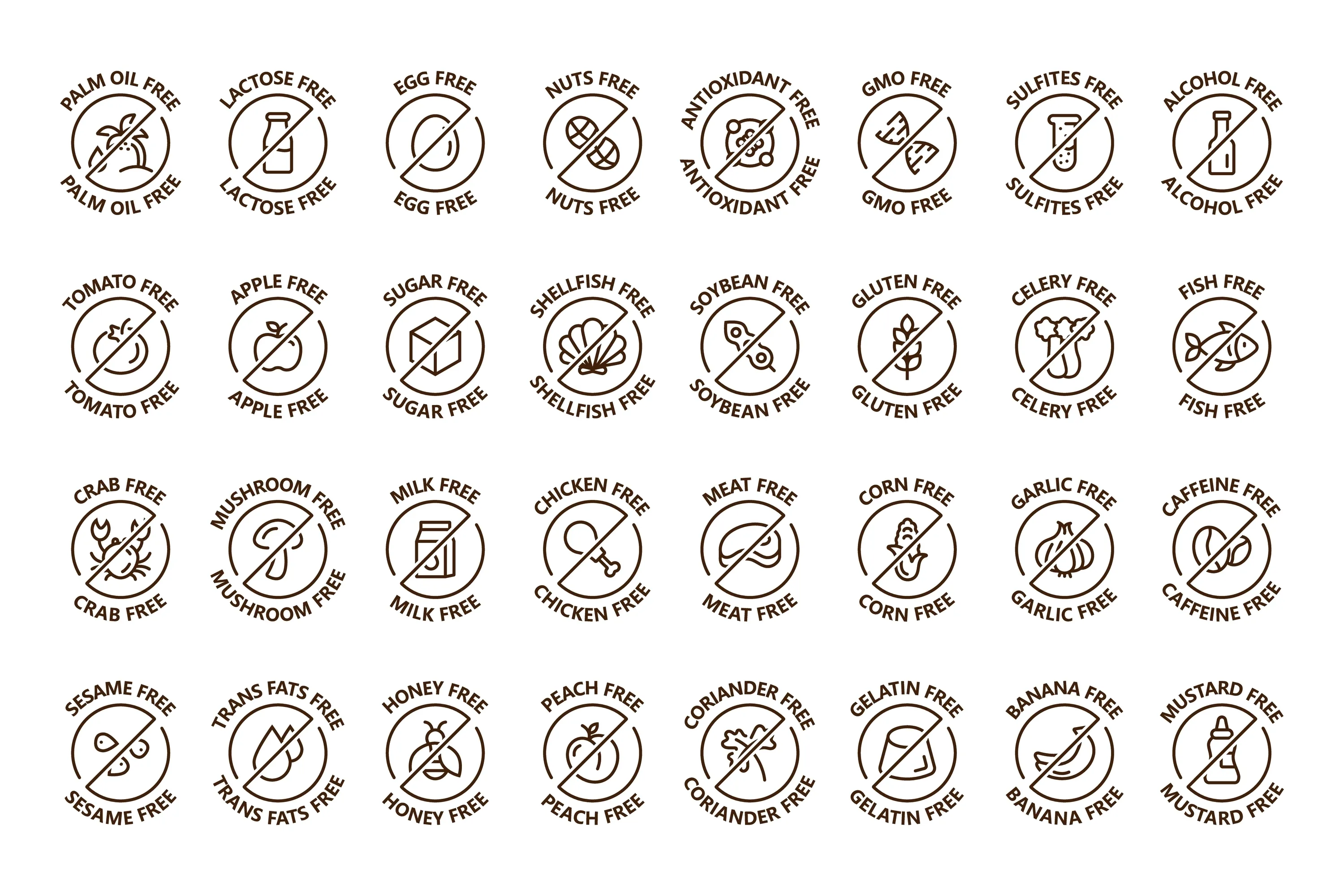
For many people, being told to avoid a particular food can initially feel restrictive. Whether the issue is a diagnosed allergy, an intolerance, a sensitivity or simply a dietary choice, the immediate reaction is often:
“What am I going to eat now?”
But perhaps we need to look at it differently.
Instead of focusing on the foods we can't eat, what happens when we start asking:
“What can I eat?”
That simple change in perspective can open the door to an entirely new world of ingredients, flavours and cooking techniques.
What initially feels like a limitation can become an opportunity to become more adventurous in the kitchen.
And this matters because removing a food doesn't automatically make a diet healthier. What matters is what replaces it.
The aim shouldn't be to create a diet based around everything you've removed.
It should be to build a nourishing, enjoyable and varied diet around what you can eat.
Don't let the label do the thinking for you
Walk into any supermarket and you'll find products proudly labelled gluten-free, dairy-free, vegan, plant-based, nut-free, sugar-free or free-from.
These labels can be incredibly useful, particularly when you need to avoid a specific allergen. But they don't automatically tell you whether a product is nutritious.
A gluten-free biscuit is still a biscuit. A dairy-free dessert can still be high in sugar. And a plant-based product isn't necessarily a good source of protein, fibre or other nutrients.
This is where a little label literacy becomes valuable.
Instead of relying solely on the claims on the front of the packet, turn it around and read the ingredient list and nutrition information. Ask yourself:
- What are the main ingredients and do I know what they are?
- Is this food providing useful nutrients?
- Is it contributing protein, carbohydrate, healthy fats or fibre?
- How processed is it?
- Is this something I want to eat regularly?
- Is it genuinely nourishing — or simply a substitute for something I've decided to avoid?
A “free-from” label tells you what a food doesn't contain.
It doesn't necessarily tell you what it does contain.
Plant-based doesn't automatically mean nutritious
The growth of plant-based eating has opened up an enormous variety of foods and ingredients, which can be fantastic.
But there is an important distinction between a plant-based diet built around whole and minimally processed foods and a diet based heavily on manufactured plant-based alternatives.
Plant-based burgers, sausages, nuggets and other synthetic meat alternatives shouldn't become the foundation of your diet.
If you choose to eat predominantly or entirely plant-based, it is worth thinking about where your protein, iron, vitamin B12, calcium, iodine and omega-3 fats are coming from.
This doesn't mean a plant-based diet cannot be nutritionally excellent. It can.
It simply means that removing animal foods doesn't automatically create a nutritionally complete diet.
The same principle applies to any dietary restriction.
The more foods you remove, the more important it becomes to consider what you are putting back in.
Focus on what you can eat
If you have a food allergy or intolerance, one of the most useful questions you can ask is:
“What foods are available to me?”
Take gluten as an example.
Removing wheat doesn't mean removing the entire grain family.
There is a huge variety of naturally gluten-free whole grains, including:
- Brown rice and its many colourful varieties
- Quinoa
- Buckwheat
- Teff
- Millet
- Amaranth
- Sorghum
Once you start exploring these foods, the options become surprisingly extensive.
And this is where cooking becomes exciting.
A restriction can encourage you to experiment with different grains, flours, herbs, spices, fermentation methods and combinations that you may never otherwise have tried.
For me, having to think differently about gluten led to discoveries such as fermented quinoa pancakes and gluten-free sourdough-style breads.
Rather than feeling that something had been taken away, my food world actually became more varied.
The restriction became the invitation to explore.
Dairy-free can open another door
The same principle applies to dairy.
If dairy doesn't work for you, there is no need to rely on one commercial substitute for everything.
Depending on your nutritional needs and preferences, you can explore nuts, seeds, grains and coconut in completely different ways.
Homemade nut and seed milks, creams, coconut yoghurt and fermented alternatives can all add variety to your diet.
And making some of these foods yourself gives you much more control over the ingredients.
A homemade nut milk can be used in porridge, smoothies or baking.
A thicker nut cream can become a sauce or dessert.
Fermented nut cheese can bring completely different flavours and textures to a meal.
One ingredient can become several different foods.
That is the beauty of cooking.
Think like a cook, not someone following a restriction
This is perhaps the most important shift of all.
When we think of ourselves as someone who can't eat certain foods, our attention naturally stays on what has been removed.
When we start thinking like a cook, the question changes.
“What can I create with the ingredients I have?”
This encourages curiosity rather than deprivation.
It also helps develop a better relationship with food.
Instead of endlessly searching supermarket shelves for an identical replacement for something you've removed, you begin discovering foods that stand confidently on their own.
A nut cheese doesn't need to be identical to dairy cheese.
A coconut yoghurt doesn't need to be dairy yoghurt.
They can simply be good foods in their own right.
Don't just replace — rethink
One of the easiest traps when following a restricted diet is trying to recreate exactly what you used to eat.
Sometimes that's useful. But it can also mean filling your shopping basket with highly processed substitutes.
Instead, ask whether the meal can be reimagined altogether.
If you can't have wheat pasta, explore lentil, brown rice, quinoa or buckwheat variants of gluten free pastas. Keeping the ingredient list to just one — for example 100% brown rice.
If dairy is out, perhaps build meals around vegetables, legumes, fish, eggs, meat, nuts and seeds, depending on your diet.
If you're avoiding gluten, perhaps discover a whole new range of grains rather than simply buying gluten-free versions of everything you previously ate.
The goal isn't to create a perfect replica of your old diet.
It's to create a better, more varied one.
Keep nutrition at the centre
Creativity is important, but it shouldn't come at the expense of good nutrition.
Whenever you remove a food or food group, consider what nutrients that food was contributing and how you will replace them.
For example, removing dairy may mean paying particular attention to calcium and protein.
Removing meat may require more thought about protein, iron and vitamin B12.
Removing gluten doesn't necessarily create nutritional deficiencies, but replacing whole grains with highly processed gluten-free products can reduce fibre and overall nutritional quality.
This is why I always come back to the same principle:
Don't focus only on what you're removing. Think about what you're adding.
More vegetables. More variety. More whole foods. More herbs and spices.
More legumes, nuts and seeds where appropriate. More interesting grains.
More cooking from scratch. More colour.
The food that replaces the food you've removed can ultimately be more important than the food you removed in the first place.
Fermentation can add another dimension
Fermentation is another technique worth exploring.
It can introduce new flavours, nutrients, textures and culinary possibilities, and it has been used across cultures for generations.
The fermented quinoa crepes below are a great example.
Quinoa is soaked, blended and allowed to ferment before being cooked into thin, versatile pancakes.
They can be made savoury or sweet and filled according to your preference.
Three recipes to get you started
Fermented Quinoa Crepes
Ingredients
- 2 cups quinoa, soaked overnight
- 1½ cups filtered water
- Salt, to taste
Method
Drain and rinse the soaked quinoa thoroughly.
Place the quinoa and water into a blender and blend until completely smooth.
Pour into a clean glass bowl. Cover loosely with a lid or a clean tea towel.
Leave in a shaded area of the kitchen, away from direct sunlight, for approximately 12 hours.
The batter should begin to develop small bubbles. At this point it can be used, or you can leave it for another 12–24 hours if you prefer a more pronounced tang.
Add salt and stir well.
For savoury crepes, fill with already made mince or other meats, scrambled egg or tofu, cheese and tomato. For sweet crepes, try banana, berries or stewed fruits with nuts and yoghurt.
Heat a non-stick frying pan. Add a little oil if necessary.
Pour in a ladleful of batter and swirl the pan to create a thin crepe.
Cook until set and lightly browned, then turn and cook the other side.
Fill with your choice of sweet or savoury ingredients.
Filling ideas
Savoury: curried mince, beans, egg and cheese, spicy tofu and avocado, chicken with mayonnaise, or meat with salad.
Sweet: fresh or stewed fruit with yoghurt and nuts, or fruit with a drizzle of honey or maple syrup.
Storage: The batter can be covered and stored in the refrigerator for up to five days. It will thicken when chilled, so loosen it with one or two tablespoons of water before using.
Homemade Almond Milk or Cream
Homemade nut milk is another simple way to expand your options when dairy isn't suitable.
Ingredients
- 1 cup almonds, soaked overnight
- 4 cups filtered water
- Pinch of salt
Method
Drain and rinse the soaked almonds.
Place them in a blender with the water and salt. Blend on high for approximately two minutes.
Line a colander with muslin, cheesecloth or a nut-milk bag and place it over a bowl.
Pour the blended mixture into the cloth.
Gather the edges together and squeeze firmly to extract the liquid.
The liquid collected in the bowl is your almond milk.
The remaining pulp can be used to create a cracker or become a binder for a muffin.
For a thicker nut cream, reduce the amount of water to approximately two cups.
Don't throw away the pulp
The leftover almond pulp can be dried gently in the oven and stored in an airtight container.
Use it in baking, sauces, crackers or muffins.
This is one of my favourite principles in the kitchen:
Use the whole ingredient wherever possible and avoiding food waste.
Fermented Nut Cheese
Ingredients
- 2 cups cashews, macadamias or Brazil nuts, soaked
- ⅓ cup fermented liquid such as water kefir, rejuvelac, kombucha or kraut juice
- 2 tbsp lemon juice or umeboshi vinegar
- ½ tsp salt, if not using umeboshi vinegar
- 1 tbsp nutritional yeast
- 2–3 tbsp freshly cracked black pepper
- 2 probiotic capsules, optional
Method
Soak the nuts. Cashews and macadamias require approximately 2–3 hours; Brazil nuts approximately 5–6 hours.
Drain and rinse thoroughly.
Place the nuts, fermented liquid, lemon juice or umeboshi vinegar and nutritional yeast into a blender.
Blend until thick and smooth. Add a little more liquid, one tablespoon at a time, if required.
Stir in some of the cracked black pepper and, if using, the contents of the probiotic capsules.
Cover and leave at room temperature for approximately 24 hours.
Shape into a log and refrigerate until firm.
Roll in the remaining cracked pepper before serving.
Make the restriction the beginning, not the end
Having to avoid a food can initially feel as though something has been taken away.
But it doesn't have to shrink your diet.
In fact, it can do the opposite.
The moment you stop asking “What can't I have?” and start asking “What else is available?”, a whole new range of possibilities appears.
A gluten-free diet can introduce you to grains you've never cooked before.
A dairy-free diet can lead you towards nuts, seeds, coconut and fermentation.
A plant-based diet can encourage you to explore legumes, whole grains, vegetables, herbs, spices and new sources of protein.
And a food allergy or intolerance can be the catalyst for becoming more knowledgeable and creative in the kitchen.
The secret is not to become obsessed with finding a substitute for everything you've removed.
Instead, discover what you can add.
More variety. More colour. More real food. More cooking. More creativity.
Don't let the restriction define your diet.
Let it expand your culinary repertoire.
Because sometimes the food you discover when something is taken away turns out to be the food you never knew you were missing.
Frequently Asked Questions
Does a “free-from” label mean a food is healthy?
Not necessarily. A free-from label tells you what a food doesn't contain, not whether it's nutritious. A gluten-free biscuit is still a biscuit, and a dairy-free dessert can still be high in sugar. It's worth reading the ingredient list and nutrition information rather than relying on the front-of-pack claim alone.
Is a plant-based diet automatically nutritious?
A plant-based diet built around whole, minimally processed foods can be nutritionally excellent, but one based heavily on manufactured plant-based alternatives may not be. If eating predominantly or entirely plant-based, it's worth thinking about where protein, iron, vitamin B12, calcium, iodine and omega-3 fats are coming from.
What are some naturally gluten-free grains to try?
Removing wheat doesn't mean removing the entire grain family. Brown rice, quinoa, buckwheat, teff, millet, amaranth and sorghum are all naturally gluten-free whole grains worth exploring.
What should I think about when I remove a food group from my diet?
Consider what nutrients that food was contributing and how you'll replace them. Removing dairy may mean paying attention to calcium and protein, removing meat to protein, iron and vitamin B12, and removing gluten to fibre, if whole grains are being replaced with highly processed gluten-free products.
Get healthy eating tips, straight to your inbox
Occasional recipes, updates and offers. Unsubscribe anytime.