Sporting Bone Broths
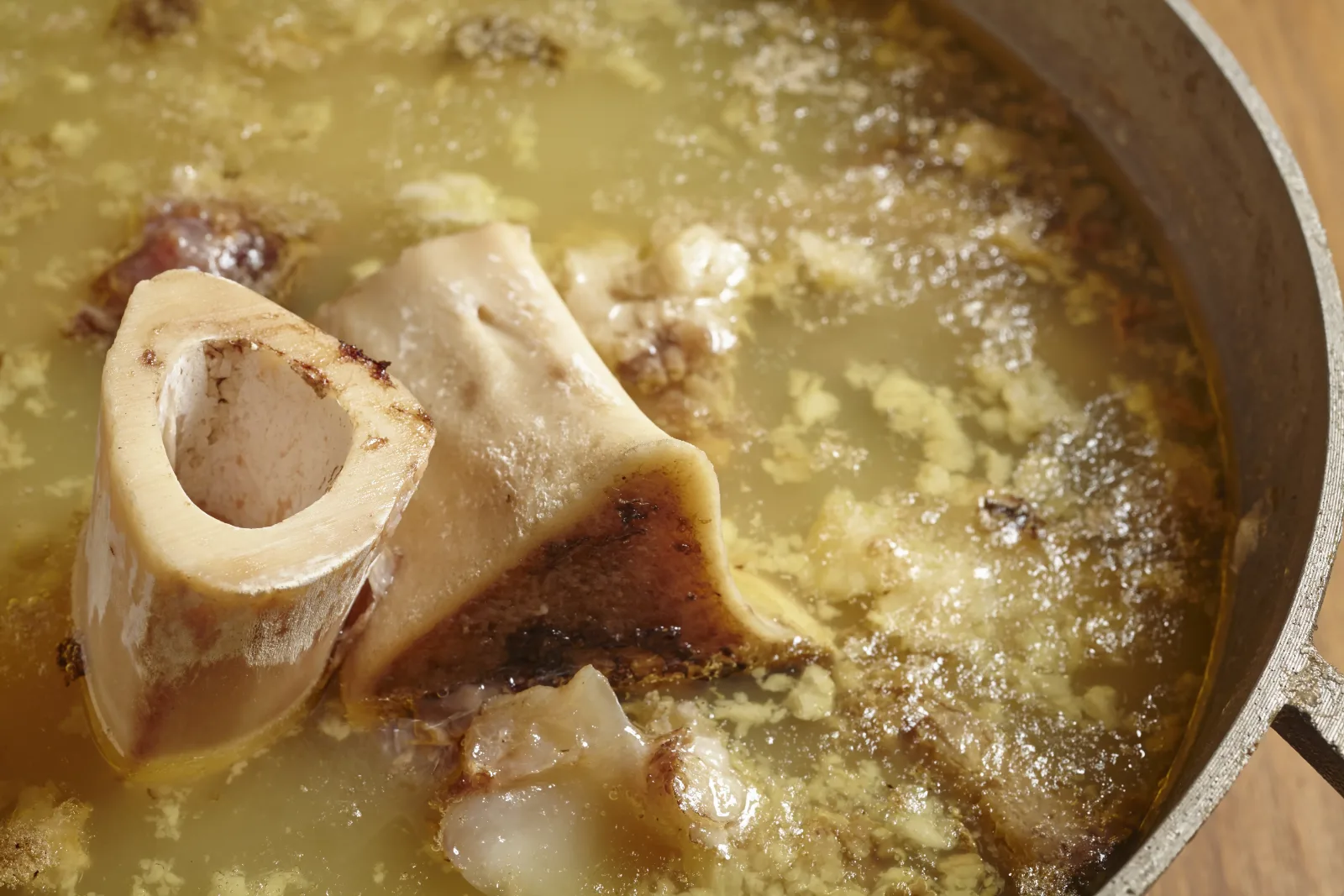
Quite some time ago, I wrote a blog about the benefits of a hearty bone broth — how this age-old tradition could nourish not only the body, but perhaps the soul too.
Now bone broth is finding its way into another arena: sport and recovery.
You may have noticed broth being offered at the finish line of endurance events, particularly marathons and Ironman races. And while it certainly hasn't replaced sports drinks or recovery nutrition, there is an interesting reason why athletes are turning to this humble, traditional food.
So, what exactly is bone broth?
Bone broth is made by slowly simmering bones and connective tissues — such as tendons, ligaments, cartilage, skin and joints — for many hours.
As the broth cooks, collagen-rich tissues break down and release gelatine, collagen-derived peptides and amino acids into the liquid. Depending on how it is prepared, the broth can also provide minerals, fat and other nutrients.
And this is where things get interesting.
Unlike a standardised supplement, bone broth is real food. Its nutritional composition isn't fixed.
The type of animal, which bones and connective tissues are used, how much water is added, how long it is cooked and even the recipe itself can all influence what's in your bowl.
Research has confirmed just how variable this can be. One study found considerable differences in the concentrations of collagen-related amino acids between different bone broths, particularly when they were made using non-standardised recipes.
For some people, that inconsistency is a problem.
For me, it's part of the beauty of real food.
Make your broth work harder
This is where I think making your own broth becomes particularly interesting.
If I'm making a stock for someone recovering from an injury, I like to think about what the body is rebuilding and choose my ingredients accordingly.
For example, if someone has injured a tendon, I make a broth using tendon-rich, connective-tissue-rich cuts, rather than simply throwing any old bones into the pot.
Does that mean the nutrients from the tendon travel directly to the injured Achilles and repair it?
Not quiet or at least we can't claim that.
But tendon and other connective tissues are naturally rich in collagen, and collagen is made from amino acids including glycine and proline. Supplying the body with the raw materials it needs for tissue repair makes nutritional sense, particularly when the overall diet is providing enough energy, protein, vitamins and minerals.
There is even experimental research suggesting that glycine can influence Achilles tendon remodelling following injury, although this was an animal study and shouldn't be interpreted as proof that tendon-rich bone broth will speed up Achilles recovery in humans.
So I would call it fairly targeted nutrition and definitely nourishing the body's repair process.
How you make it matters
The final broth depends enormously on how you make it.
I often use a good splash of apple cider vinegar or another acidic ingredient when making stock because acidity can help extract minerals from the bones.
This isn't just an old wives' tale. Studies have found that lowering the pH of bone broth increases the extraction of minerals such as calcium and magnesium, and prolonged cooking can increase calcium extraction further.
The cooking time matters too.
For smaller, lighter bones such as chicken or fish, I might cook a stock for around 24 hours in my slow cooker.
For larger, denser bones from beef, lamb or venison, I prefer 36 hours or longer, depending on the ingredients and the result I'm looking for.
The longer cooking time, the quality and type of bone, the amount of connective tissue, the quantity of water, the addition of acid and even whether the bones have been roasted first will all influence the final broth.
And that is precisely why you can't put a homemade bone broth neatly into a capsule and assume that every batch is the same.
Nourishing the gut
There's another reason I particularly like bone broth for recovery: the gut.
The gastrointestinal tract is not simply a tube that processes food. The intestinal barrier is a complex system involving the mucus layer, epithelial cells and immune defences, and maintaining its integrity is important for normal digestion, absorption and immune function.
Bone broth contains amino acids including glutamine, glycine and proline, along with minerals and other compounds that are biologically relevant to intestinal function.
A 2025 review specifically examined bone broth in relation to intestinal barrier integrity and concluded that its constituent nutrients have plausible roles in supporting gut barrier function, while also highlighting the need for further research.
So I find the traditional use of broth particularly interesting when someone is nutritionally depleted, recovering from illness or heavy training, struggling to tolerate large meals, or simply needs something nourishing and easy to digest.
For an older or frail person with a poor appetite, a warm, savoury broth can be an appealing way of getting fluids and nutrients into the diet.
For an athlete coming off a long endurance event, it can provide fluid and sodium alongside a source of amino acids.
And for someone whose digestive system is feeling fragile, it can be a gentle food to include as part of a broader, nourishing diet.
I would describe it as a gut-healing food — something that truly gives back to the body.
And then there's the sodium
This may actually be one of the most practical reasons for serving broth after a long endurance event.
Sweating results in fluid and sodium losses, although the amount varies considerably between athletes.
A salty broth can therefore provide fluid and sodium at the same time, making it a comforting and potentially useful recovery food.
Of course, the sodium concentration of homemade broth isn't standardised either, so you can't assume that every cup contains the same amount.
And that's why broth shouldn't be treated as a precise electrolyte replacement strategy for every athlete.
But as part of a broader recovery meal?
I absolutely love it.
Amino acids: food first
Bone broth is particularly rich in several amino acids associated with collagen and protein metabolism.
Proline
Proline is one of the major amino acids found in collagen and plays an important role in the structure of connective tissue.
Glycine
Glycine is another major component of collagen. It is also involved in numerous physiological processes, including protein synthesis and the production of compounds such as glutathione and creatine.
Glutamine
Glutamine is an abundant amino acid in the body and plays important roles in immune and intestinal function as well as nitrogen metabolism.
It has long attracted attention in sports nutrition, particularly during periods of heavy training.
Alanine
Alanine is another amino acid found in bone broth and plays a role in glucose-alanine cycling and energy metabolism.
It is tempting to look at each amino acid individually and attribute a specific performance or recovery benefit to it. But eating a food that contains alanine, for example, is not the same thing as taking alanine as an ergogenic supplement. The dose, context, absorption and overall food matrix are very different.
And this is an important lesson in nutrition: just because a food contains a particular nutrient doesn't automatically mean that eating the food produces every physiological effect associated with that nutrient in isolation.
But that doesn't make the nutrients in real food any less valuable. Quite the opposite.
I'm very much a foods-first person. I would far rather build nutrition around nourishing, minimally processed foods that provide a whole package of nutrients, energy, flavour and other beneficial compounds than start by looking for individual nutrients in isolation.
So when I talk about the glycine, proline, glutamine or alanine in bone broth, I'm not suggesting that you need to take these amino acids as supplements. I'm highlighting what makes this traditional food interesting from a nutritional perspective.
The food comes first. The nutrients are part of the package.
Bone broth isn't a protein shake
This is an important point for athletes.
Bone broth provides amino acids, but collagen is not a complete, muscle-building protein in the way that whey, dairy, eggs or meat are.
Research comparing collagen with higher-quality proteins has found that collagen does not stimulate muscle protein synthesis to the same extent as whey.
So I wouldn't position bone broth as a replacement for a proper protein-rich recovery meal.
Instead, think of it as one useful component of a recovery diet — particularly when you're looking for fluid, sodium, warmth and collagen-derived amino acids.
And then there's the uncertainty…
This is the part I love about real food.
A beef bone broth made with marrow bones, tendons and connective tissue isn't nutritionally identical to a chicken broth made from a carcass.
A lamb broth isn't the same as either.
The amount of collagen, gelatine, amino acids, fat, minerals and sodium can vary enormously depending on the ingredients and preparation.
Research has demonstrated substantial variation in the concentrations of collagen-related amino acids between different bone broths.
Perhaps that's simply what real food looks like.
Should athletes be drinking bone broth?
Absolutely! There is something wonderfully satisfying about returning to a food that has been nourishing humans for generations.
A steaming mug of savoury broth after hours of running or cycling provides fluid, sodium, warmth and a source of collagen-derived amino acids.
And for an athlete who enjoys it and tolerates it well, that's a pretty good combination.
It may also be particularly valuable when recovery involves more than just muscle.
Bones, tendons, ligaments, cartilage and the gut all need nourishment.
Perhaps the smartest approach isn't to ask which single nutrient we should take for each problem, but to provide the body with a broad range of nutrients from good-quality food while it gets on with the remarkably complex business of repair.
And perhaps that's the real beauty of bone broth.
It doesn't come in a perfectly standardised package.
It doesn't need a complicated ingredient list.
And it certainly doesn't need to pretend to be anything other than what it is:
A simple, traditional food with a fascinating and even manipulative nutritional profile.
Frequently Asked Questions
Can I make a bone broth specifically for an injury?
You can certainly choose ingredients that are naturally rich in the tissues you're trying to nourish. For example, a broth made with tendon and connective-tissue-rich cuts will provide collagen-derived amino acids such as glycine and proline. However, there is no evidence that these nutrients are directed specifically to an injured tendon. Think of it as supporting the body's overall repair process, rather than targeting the injury directly.
Does adding vinegar really extract more minerals from bones?
It can. Acidity helps dissolve minerals from bone, and studies have found greater calcium and magnesium extraction when broth acidity is increased. Prolonged cooking also influences mineral extraction.
Is bone broth good for the gut?
Bone broth contains nutrients — including glycine, glutamine and proline — that have biological roles relevant to intestinal function. A recent review found a plausible role for bone-broth nutrients in supporting intestinal barrier integrity, but more human research is needed before bone broth can be described as a treatment for intestinal permeability or gastrointestinal disease.
How long should I cook bone broth?
There is no single perfect cooking time. Smaller poultry or fish bones can be cooked for around 24 hours, while larger beef, lamb or venison bones can be cooked for 36 hours or longer. The type, size and quality of the bones, amount of water, acidity and cooking method all influence the final broth. Longer cooking can increase the extraction of some minerals.
Is bone broth enough for an athlete's recovery?
No. Bone broth can be a useful part of recovery, particularly as a source of fluid, sodium and collagen-derived amino acids, but it isn't a substitute for a complete recovery meal. Athletes still need sufficient energy, carbohydrates where appropriate and adequate high-quality protein to support muscle repair and adaptation.
Get healthy eating tips, straight to your inbox
Occasional recipes, updates and offers. Unsubscribe anytime.